
Central Vietnam·15 min read

The Ancient Shadow of Hue

A walk through the impermanence of the Imperial City, where time drifts like the river and moss claims the throne.

Portrait of WalkVietnam

WalkVietnam

Senior Editor, WalkVietnam·

The air in Hue hangs heavy with history, a damp velvet cloak that muffles the sounds of the modern city. Here, time does not rush; it drifts, much like the Perfume River that bisects the city in a lazy, serpentine embrace. To walk through Hue is to walk through a memory that hasn't quite faded, a sepia photograph breathing slowly in the humid afternoon.

I arrived just as the rain began to cease, leaving the streets slick and reflective. The Imperial City, the great citadel that once housed the Nguyen Dynasty, loomed across the water. It wasn't the imposing fortress I had read about in history books, but something softer, more vulnerable.

The Walls of The Citadel

The Silence of Stones

Inside the walls, the silence is physical. It presses against your ears. The Purple Forbidden City, once accessible only to the Emperor and his concubines, is now largely a ghost of itself, destroyed by wars and time. Yet, in the spaces between the ruins, life has reclaimed its territory.

Electric green moss clings to the crumbling brickwork, a vibrant reminder of nature's persistence. It is a slow conquest. The roots of ancient Banyan trees snake through the foundations of broken palaces, holding the debris together even as they pull it apart. There is a profound beauty in this decay—a Japanese concept known as wabi-sabi, but here it feels distinctly Vietnamese: resilient, enduring, and quietly melancholy.

We do not rebuild to hide the scars. We rebuild to honor that we survived them.

Walking the perimeter, I met an old man tending to the bonsai gardens. He didn't speak English, and my Vietnamese was broken at best, but he gestured towards a koi pond where the water was so still it looked like glass. He smiled, a gesture that bridged the gap between our worlds. In Hue, communication often happens in these quiet pauses.

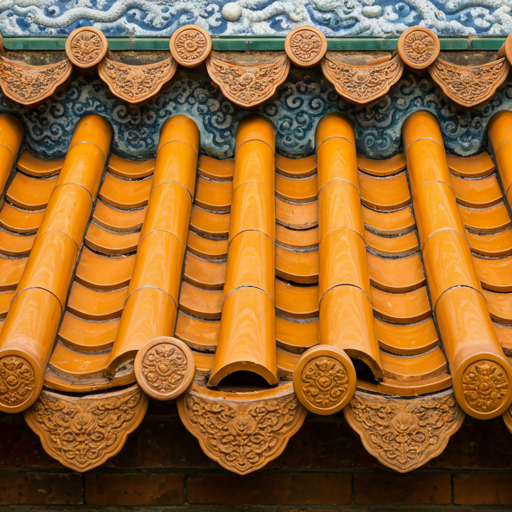
Intricate dragon motif on ceramic roof tile
Faded red wooden door with brass knocker

The Perfume River at Dusk

As evening approached, I left the citadel and made my way to the riverbank. The Perfume River earns its name in the autumn when orchids fall into the water upstream, carrying a subtle scent to the city. Today, it smelled only of rain and wet earth.

Dragon boats, painted in gaudy reds and golds, began to drift lazily downstream. The sun dipped below the horizon, painting the sky in hues of bruised purple and charcoal. This is the "Shadow of Hue"—not darkness, but a dimming, a lowering of the volume until the world feels intimate and small.

There are no neon signs flashing here, no frantic traffic of Hanoi or Ho Chi Minh City. Just the soft lapping of water against the embankment and the distant hum of a motorbike engine fading into the night. It is a place to be alone with your thoughts, to measure your steps against the stones that have been here for centuries.